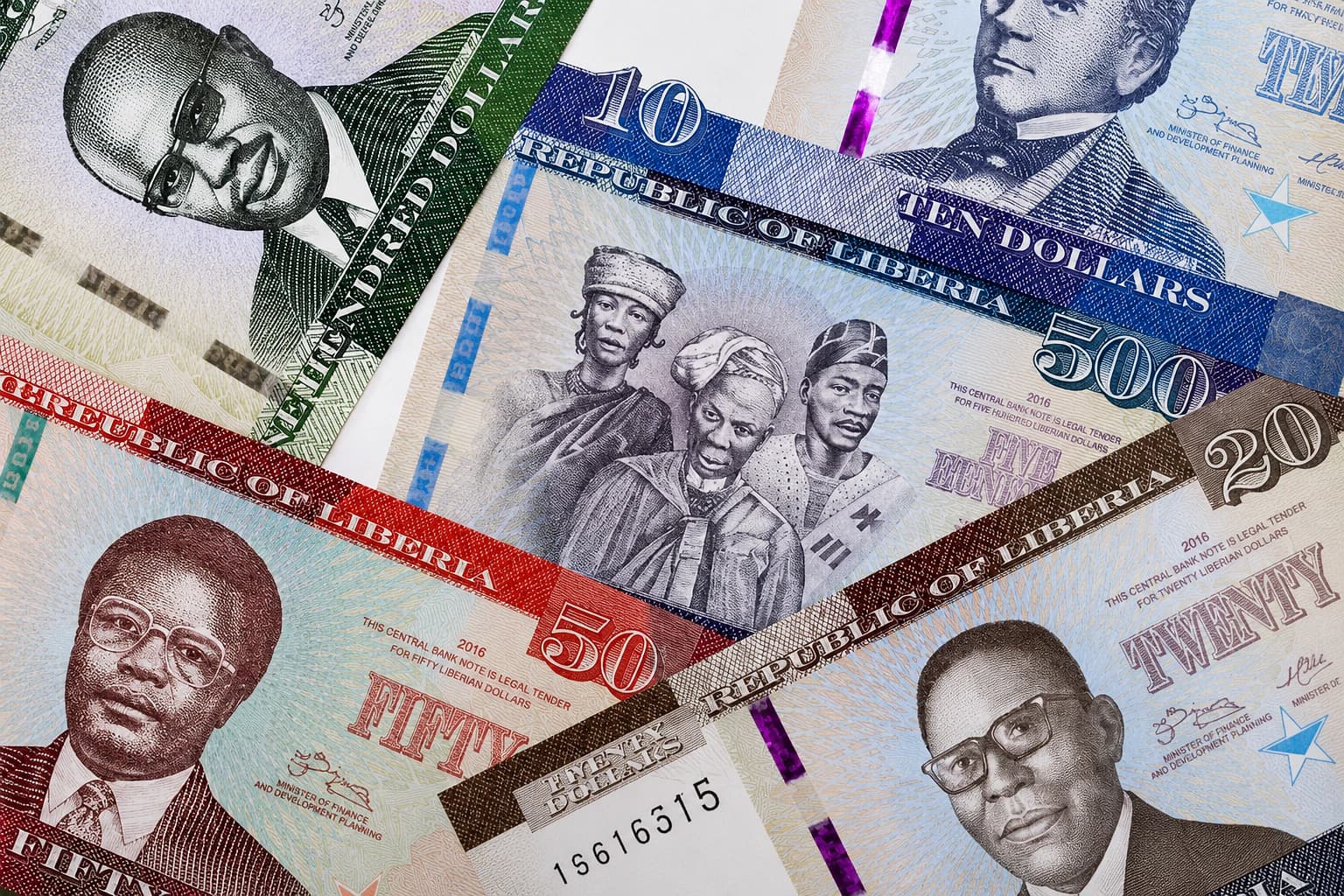
Broad money — the total stock of currency, demand deposits, savings, and time deposits in the economy — reached L$299,356.37 million in March 2026, up 10.66 percent year-on-year, according to the Central Bank of Liberia (CBL). At the prevailing exchange rate of L$183.93 per US dollar, that is roughly US$1.63 billion in total liquidity.
The headline growth is notable but not alarming. The more revealing signal is underneath it. Narrow money — currency in circulation plus demand deposits, the balances people and businesses use for daily transactions — rose 7.86 percent in March alone to L$219,278.37 million. Quasi money — savings deposits, time deposits, and other less liquid holdings — fell 6.51 percent to L$80,078.00 million.
The shift means the economy is holding more of its money in forms that are immediately spendable and less in forms locked up in savings. Narrow money now makes up 73.25 percent of the total money supply, up from 70.32 percent in February. Quasi money dropped to 26.75 percent.
For commercial banks, the composition matters directly. Demand deposits can be withdrawn at any time, which limits how aggressively banks can lend against them. Time and savings deposits — quasi money — are more stable funding that banks can use to extend longer-term credit. When deposits shift from quasi to narrow, banks face a maturity mismatch: more volatile funding, the same loan portfolio. The natural response is caution — which helps explain why private-sector credit growth remains anemic even as the total money supply expands at double digits.
For businesses seeking loans, the implication is that credit conditions are unlikely to ease meaningfully in the near term. Banks with a shrinking share of stable deposits have less incentive to extend new credit and more reason to protect existing margins — already wide, with the average lending rate at 13.11 percent against a savings rate of 1.94 percent as of February 2026.
The reserve money base — the narrower measure that the CBL controls most directly — expanded 31.18 percent year-on-year to L$93,242.05 million in March 2026. That pace, nearly three times the rate of broad money growth, suggests the central bank's own balance sheet is expanding faster than the commercial banking system's. The money multiplier — broad money divided by reserve money — stood at 3.21 in March, meaning each Liberian dollar of reserve money supported about L$3.21 in the broader economy.
The 31 percent reserve-money expansion is one reason the CBL has held the policy rate at 16.25 percent despite headline inflation moderating to 4.50 percent. Cutting rates while the monetary base is growing at this pace risks reigniting price pressure before the expansion translates fully into economic activity.
For depositors, the practical question is whether a 1.94 percent savings rate — negative in real terms after 4.50 percent inflation — is worth locking up money for. The shift from quasi to narrow suggests many savers have answered: the opportunity cost of savings deposits is too high when inflation erodes the principal faster than interest replenishes it.