Liberia's rubber sector contributed US$105.99 million to GDP in constant prices in 2025, up 8 percent from US$98.14 million in 2024, according to national accounts data from LISGIS. The figure sits above the 24-year average of US$96.02 million and marks the strongest constant-price reading since 2014 — a recovery, but still well below the sector's pre-war peak of US$149.95 million in 2005.
Monthly production data paints a more volatile picture. Rubber output hit 14,214 metric tons in June 2025 — the highest monthly reading in recent years — before plunging to 1,871 tons in September 2025, the lowest. March 2026 came in at 3,476 metric tons, down 29.75 percent from 4,948 tons in March 2025 and well below the 24-month average of about 6,078 tons. The 24-month range — from 1,871 to 14,214 tons — reflects a sector whose output is dominated by tapping seasons, weather and the operational rhythms of large concessions.
The export value of rubber followed production down. Rubber exports totaled US$7.05 million in March 2026, down 54.49 percent from US$15.49 million a year earlier. The 24-month average was about US$10.81 million per month. The decline is primarily a volume story — less rubber tapped means less rubber shipped — though global natural rubber prices have also been volatile.
For an economy where rubber has historically been one of the most important agricultural exports, the sector's position is changing. Rubber sits within a broader agriculture and fisheries sector that generated US$1,110 million in constant-price GDP in 2025, up 4.72 percent. But rubber's share of agricultural GDP has been shrinking as other crops — cassava, rice, palm oil, cocoa — have expanded and as mining has drawn labor and investment away from the plantation sector.
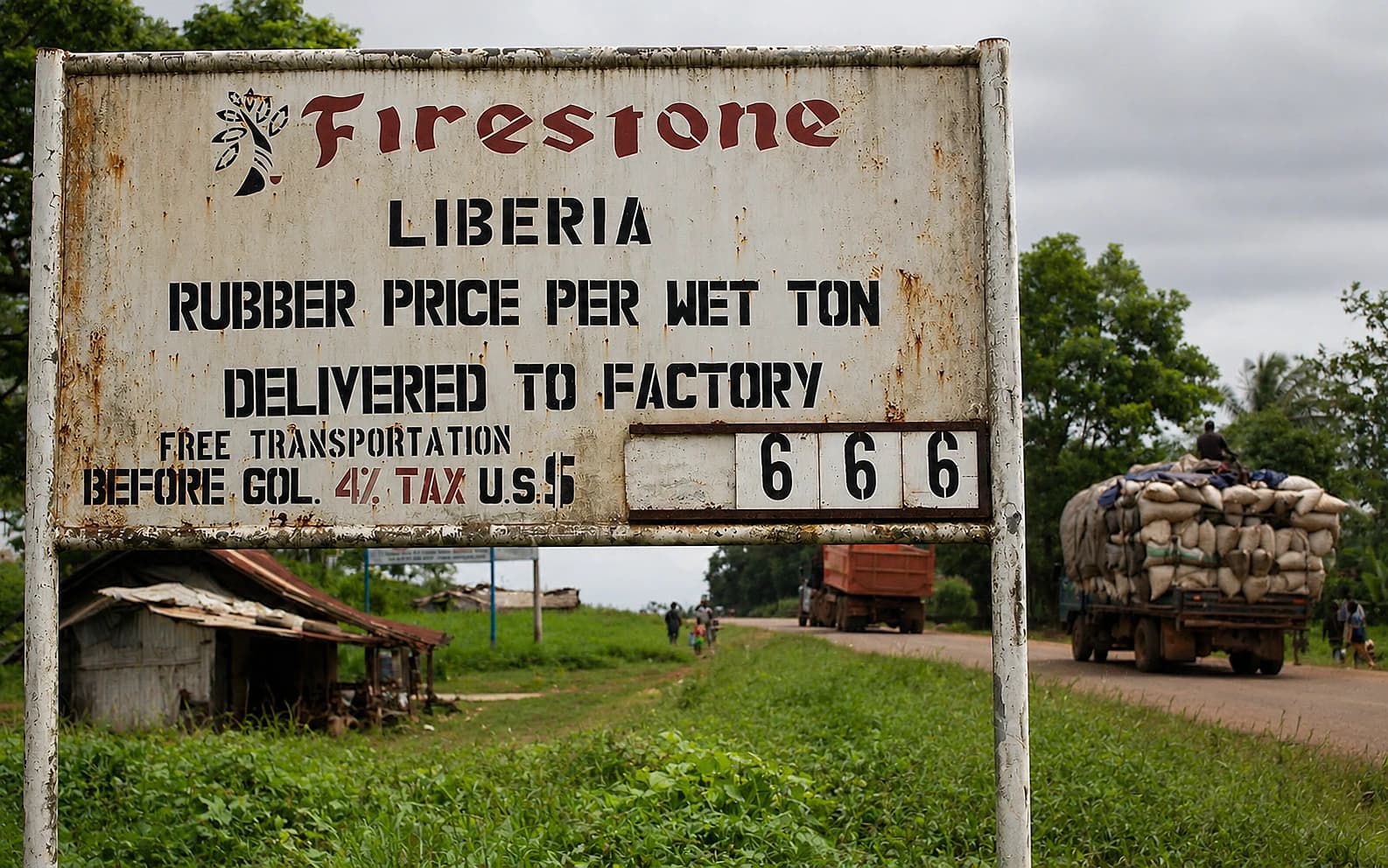
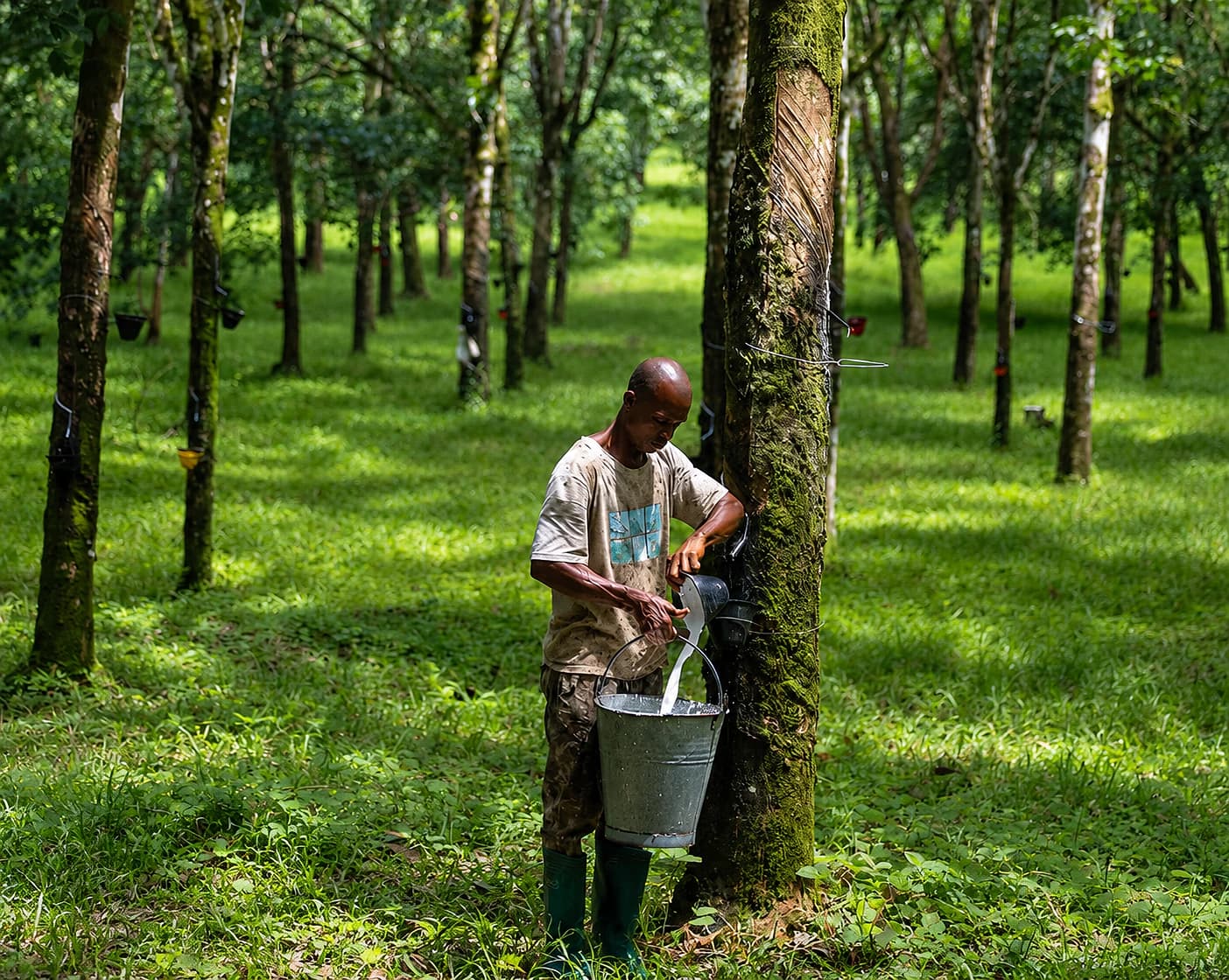
The concession structure matters. Liberia's rubber production is split between large foreign-owned estates — Firestone in Margibi County remains the most prominent — and thousands of independent smallholder farmers who operate small plots. The large estates are price takers on global markets: they produce when prices justify the operating cost, and idle capacity when they do not. Smallholders have less flexibility; they tend to tap year-round for cash income regardless of price, but their individual output is small.
For the labor market, rubber remains significant. The sector employs tens of thousands of workers — tappers, processors, transporters — many in rural counties where alternative formal employment is scarce. The wage income from rubber tapping, even at low output months, supports local economies that have few other cash-generating activities.
The medium-term question is whether rubber can hold its ground against two pressures: the pull of mining, which offers higher wages and has drawn workers away from plantations; and the push of global markets, where synthetic rubber and Southeast Asian natural rubber keep prices competitive. Liberia's natural rubber is high quality — the climate and soil in Margibi, Bong and Nimba counties are well suited to the crop — but quality alone has never been enough to insulate producers from price cycles.
For entrepreneurs, the opportunities lie less in rubber production itself than in processing and logistics. Most Liberian rubber is exported as raw latex or technically specified rubber (TSR) with minimal processing. Moving up the value chain — into crumb rubber, rubber thread, or even basic manufactured products like sandals or gaskets — would capture more margin domestically. The infrastructure and capital requirements are significant, but the raw material is abundant and the labor is experienced.