
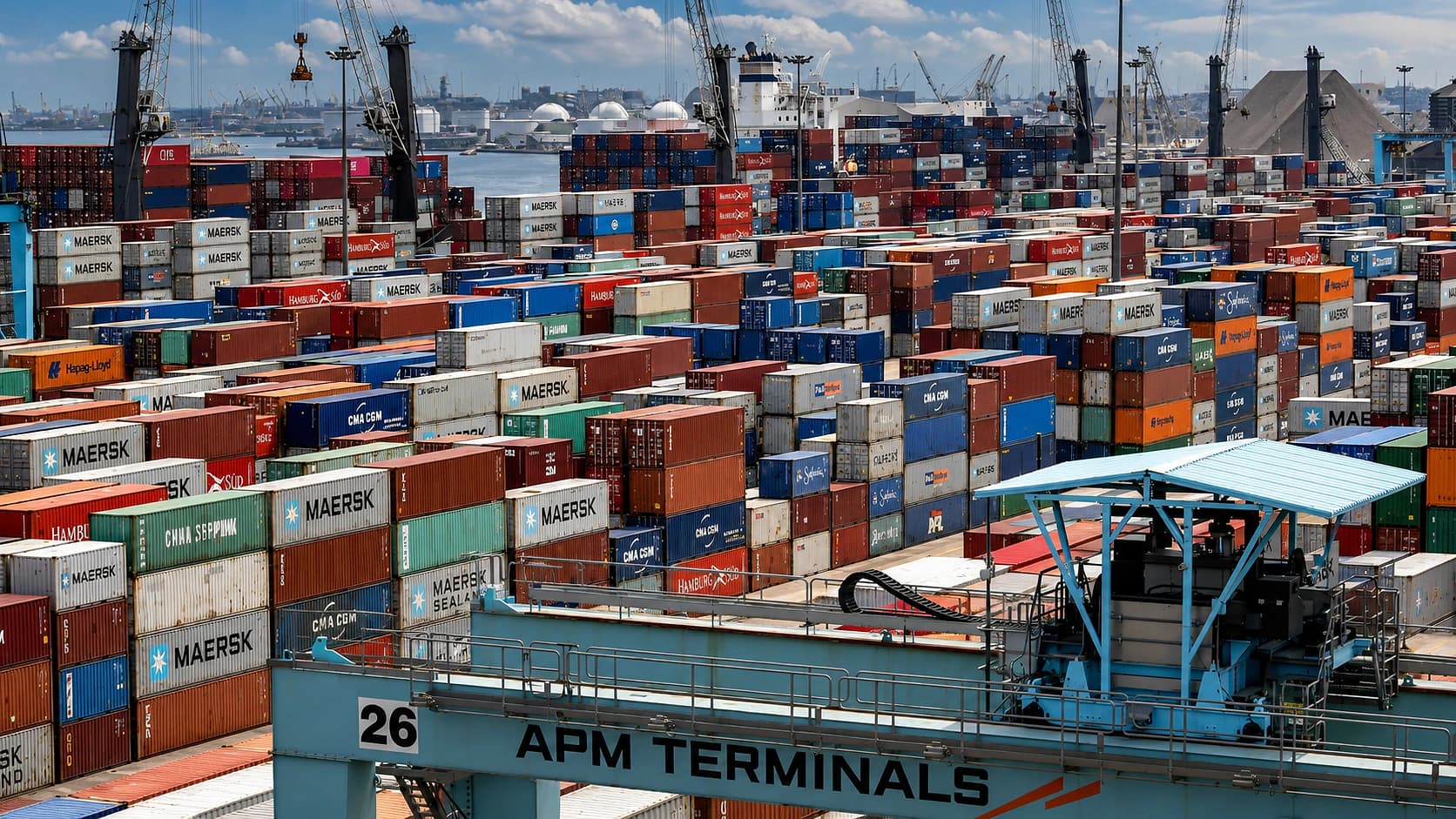
Goods imports rose 47.26 percent in March 2026 to US$314.08 million on an FOB basis, the highest monthly figure in at least two years of available Central Bank of Liberia (CBL) data. February 2026 recorded US$213.28 million. Year-on-year, the increase is sharper still: imports more than doubled, up 114.80 percent from the March 2025 level.
Exports also rose, climbing 15.85 percent to US$263.28 million, according to the CBL. But imports grew roughly three times faster, flipping the trade balance from a US$13.98 million surplus in February to a US$50.80 million deficit in March — a swing of US$64.78 million in a single month.
For the small retailers and traders who line the commercial corridors of Waterside, Duala, and Red Light markets, the deficit is an abstraction. The competitive question is more immediate: what happens when this much new merchandise enters a market of limited purchasing power?
A high-import month means more goods flowing to wholesalers and distributors, who pass volume through to retail in the weeks that follow. For a trader who stocked up in February at one price, the arrival of fresh inventory at potentially lower per-unit costs creates a choice: match the new price and accept a thinner margin, or hold the line and risk losing customers to a better-stocked competitor one stall over.
The exchange rate did not move meaningfully during the period. The Liberian dollar ended March 2026 at L$183.93 per US dollar, according to the CBL, essentially flat from L$183.51 in February — a change of 0.23 percent. The stability means the import increase reflects higher real volumes or unit values, not a currency-driven repricing. For importers buying in March, the foreign-exchange cost per shipment was unchanged.
That stability is a partial shield, but the more consequential pressure comes from scale. Larger importers — those with the capital to order full containers and the relationships to clear customs efficiently — can stock deeper, price more aggressively, and absorb warehousing costs that would be prohibitive for a trader operating from a single market stall. In a high-volume month, the advantage of scale compounds.
The 24-month average for monthly imports is US$174.89 million, according to CBL data. March 2026, at US$314.08 million, sits 80 percent above that average — the kind of deviation that suggests either a one-time bulge, perhaps end-of-quarter shipments or a large industrial consignment, or a step change in import activity that will take several months to confirm.
For small retailers, the practical response to a high-import month is familiar: watch what the larger distributors are pricing, move existing inventory before it is undercut, and avoid overcommitting capital to stock that may face stiffer competition in the weeks ahead. What to watch is whether the April and May import figures confirm a new baseline or whether March was an outlier — the difference determines whether small retailers are adjusting to a temporary glut or a permanently more competitive market.