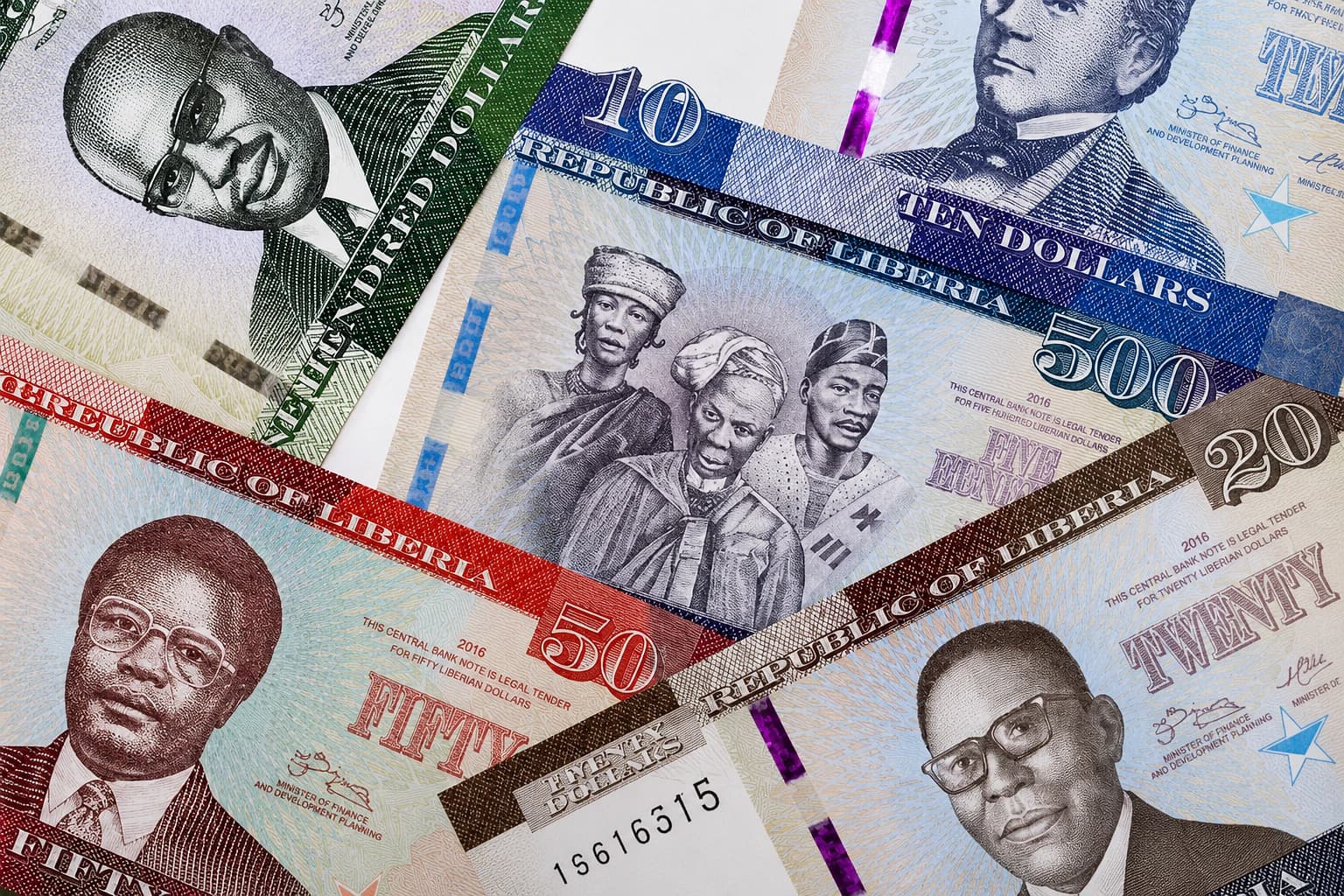
The average lending rate on Liberian-dollar loans stood at 13.11 percent in February 2026, according to the Central Bank of Liberia (CBL). The average savings rate on Liberian-dollar deposits: 1.94 percent. The gap between the two — 11.17 percentage points — is the single most important number in the domestic investment landscape, because it determines who benefits from the financial system and who subsidizes it.
For anyone holding money in a Liberian-dollar savings account, the arithmetic is unforgiving. The savings rate of 1.94 percent sits well below the 4.50 percent year-on-year inflation rate recorded in March 2026. That means a saver with L$1,000,000 on deposit earns roughly L$19,400 in annual interest — while inflation erodes about L$45,000 of purchasing power from the same balance. The net result is a real loss of approximately L$25,600 per year, or 2.56 percent of the principal.
The market has noticed. Quasi money — the CBL's measure of savings and time deposits — fell 6.51 percent in a single month in March 2026 to L$80,078.00 million. Narrow money, which captures currency in circulation and demand deposits, rose 7.86 percent over the same period. Depositors are moving money out of savings and into transaction balances, a rational response to negative real returns.
On the lending side, the rate has been climbing. In September 2025, the average LRD lending rate was 12.38 percent. By February 2026 it had risen 73 basis points to 13.11 percent — tracking the CBL's policy rate, which has been held at 16.25 percent since October 2025. The savings rate, meanwhile, barely moved: from 2.00 percent in September 2025 to 1.94 percent in February 2026. The spread is widening because banks are passing rate increases through to borrowers but not to depositors.
The pattern is not unique to Liberian-dollar accounts. USD-denominated lending also averaged 13.11 percent in February 2026, while USD savings paid just 1.94 percent — an identical 11.17-point spread. USD time deposits offered a slightly better 3.67 percent, but that still falls short of domestic inflation.
For businesses evaluating capital allocation, the spread creates a clear incentive structure. Borrowing is expensive — a L$10 million loan at 13.11 percent costs roughly L$1.31 million in annual interest. Saving is punished — the same L$10 million on deposit earns L$194,000 while losing L$450,000 to inflation. The rational response, for any business with profitable reinvestment options, is to deploy capital rather than hold it.
The CBL's 16.25 percent policy rate is designed to anchor inflation expectations and support the exchange rate, which has appreciated 7.92 percent over the past year to L$183.93 per US dollar. But the transmission mechanism runs in one direction: policy tightening reaches borrowers through higher loan rates, while depositors see no corresponding benefit. Until banks face competitive pressure to raise deposit rates — or the CBL signals a rate-cutting cycle — the spread will remain wide and the incentive to save in the formal banking system will remain weak. The structural barriers behind those margins — informality, weak collateral registries, slow recovery on defaulted loans — are examined in The Cost of Credit.
For individual savers and small investors, the practical question is whether any accessible vehicle offers a positive real return. At current rates, the answer within the banking system is no. Even the 3.67 percent USD time deposit rate falls 83 basis points short of inflation. The implication is that capital preservation requires either a higher-yielding alternative outside the banking system or a bet on continued currency appreciation to offset the negative real deposit rate.