Liberia's economy grew 4.57 percent in real terms in 2025, reaching US$3,865.8 million in constant prices. Nominal GDP crossed US$5 billion for the first time. Services — the sector where most startups operate — expanded 4.29 percent to US$1,495.78 million. By the broadest measure, the economy is growing and creating demand. But the conditions that determine whether a new business survives its first year tell a harder story.
The most binding constraint is capital. A Liberian entrepreneur starting a business in 2026 faces personal loan rates of 16.16 percent if borrowing in Liberian dollars, according to February 2026 data from the Central Bank of Liberia. If the business is formalized and qualifies for commercial credit, the rate drops to 13.11 percent — still among the highest in West Africa. At either rate, a startup must generate returns well above the cost of borrowing just to service its debt, leaving little margin for the setbacks that are routine in a first year of operations.
Most new businesses cannot access even the commercial rate. Bank credit to the private sector is barely growing, and banks are lending cautiously to existing clients. A first-time business owner without collateral, audited accounts or a banking relationship is, for practical purposes, excluded from formal credit.
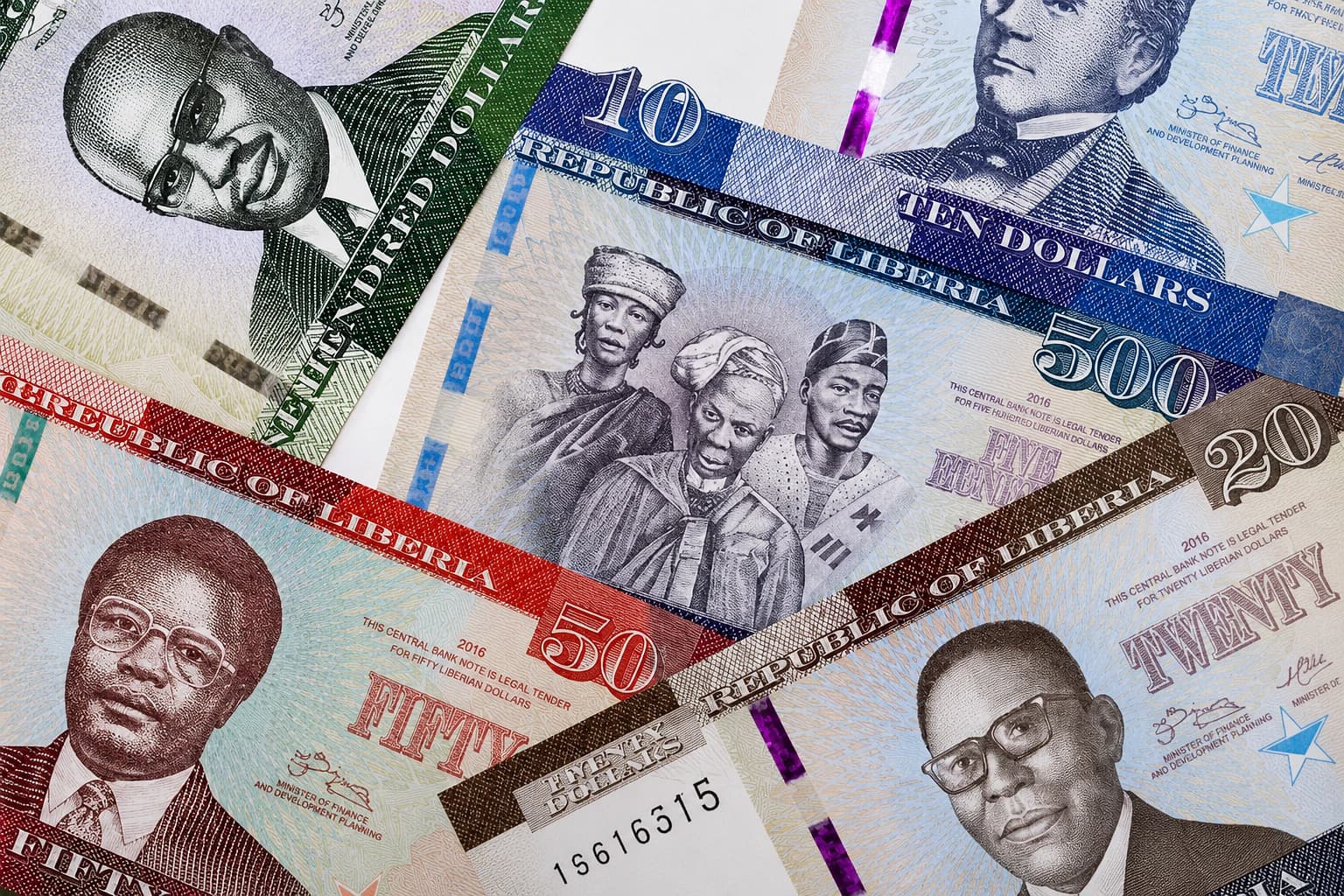
The exchange rate adds another layer of cost. At L$183.93 per US dollar in March 2026, every piece of imported equipment, inventory or raw material carries a currency premium. A restaurant buying a commercial refrigerator priced at US$1,500 pays L$275,895 — a sum that, at 16.16 percent interest, costs L$44,600 per year to finance. In an economy where most capital goods are imported, the exchange rate is an invisible input cost that new businesses absorb from day one.
The economy's structure shapes what kinds of startups are viable. Agriculture and fisheries accounted for 28.7 percent of real GDP in 2025 (US$1,110 million), but most agricultural activity is subsistence-level, with limited opportunities for new entrants without access to land and equipment. Mining contributed 18.4 percent of GDP (US$710.82 million), but is dominated by multinational concessionaires. Manufacturing, at 6.4 percent (US$246.01 million), remains small. The services sector, at 38.7 percent, is where the startup opportunities are — trade, hospitality, transport, financial services — but also where competition is fiercest and margins are thinnest.
Power remains a constraint. Electricity generation reached 54,799,000 kilowatt-hours in March 2026, up 30.74 percent from a year earlier, but the grid covers a fraction of the country and many businesses rely on diesel generators that add US$0.30 to US$0.50 per kilowatt-hour to operating costs. A small manufacturer or cold-storage operator running a generator eight hours a day can spend more on fuel than on rent.
The savings rate compounds the problem. At 1.94 percent on LRD savings accounts, the banking system offers no meaningful return on the small amounts of capital that aspiring entrepreneurs might accumulate. Informal savings mechanisms — susu clubs, family pooling, diaspora loans — fill part of the gap but come with their own limitations in scale and reliability.
The businesses that do survive tend to share a pattern: they are self-financed or family-financed, they start in services rather than manufacturing, they avoid debt where possible, and they grow slowly by reinvesting profits. That model works, but it limits the scale of ambition. Until the cost of formal credit falls or alternative capital sources emerge, the Liberian startup environment will continue to select for low-capital, low-risk ventures — and the economy will underperform its potential for new-business creation.