Agriculture and fisheries — the sector that supports the largest share of Liberian livelihoods — grew only modestly in 2025, with output valued at US$1.40 billion, up about 1.3 percent from US$1.38 billion a year earlier, according to national accounts data from the Liberia Institute of Statistics and Geo-Information Services (LISGIS).
In real, inflation-adjusted terms the picture was somewhat stronger, with output rising about 4.7 percent, indicating that part of the slow nominal growth reflected softer prices for farm produce rather than falling volumes. The World Bank has put agricultural growth lower still, near 2.6 percent for 2025 — another instance of national and international estimates diverging on a sector that is notoriously hard to measure where much output is for subsistence.
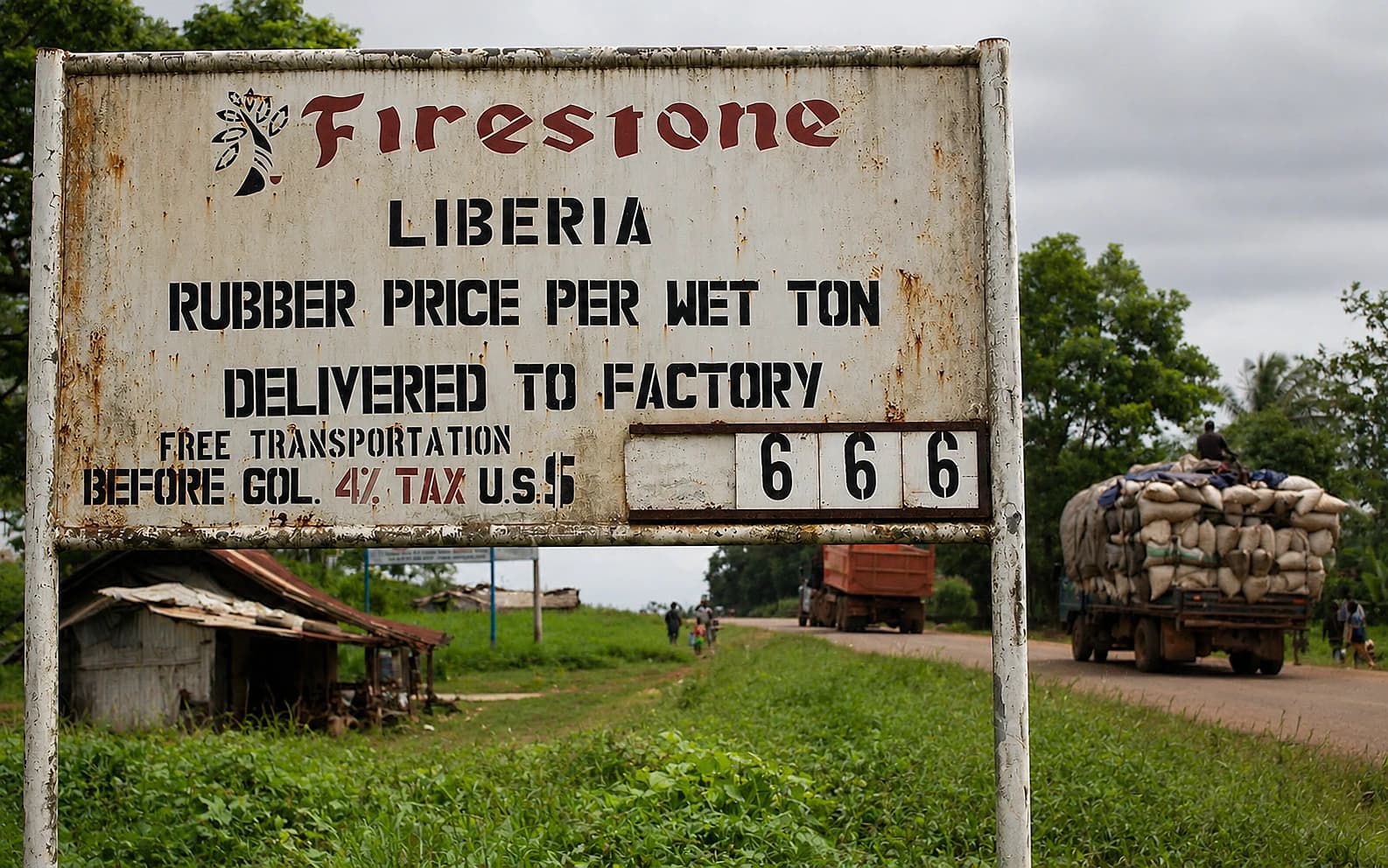
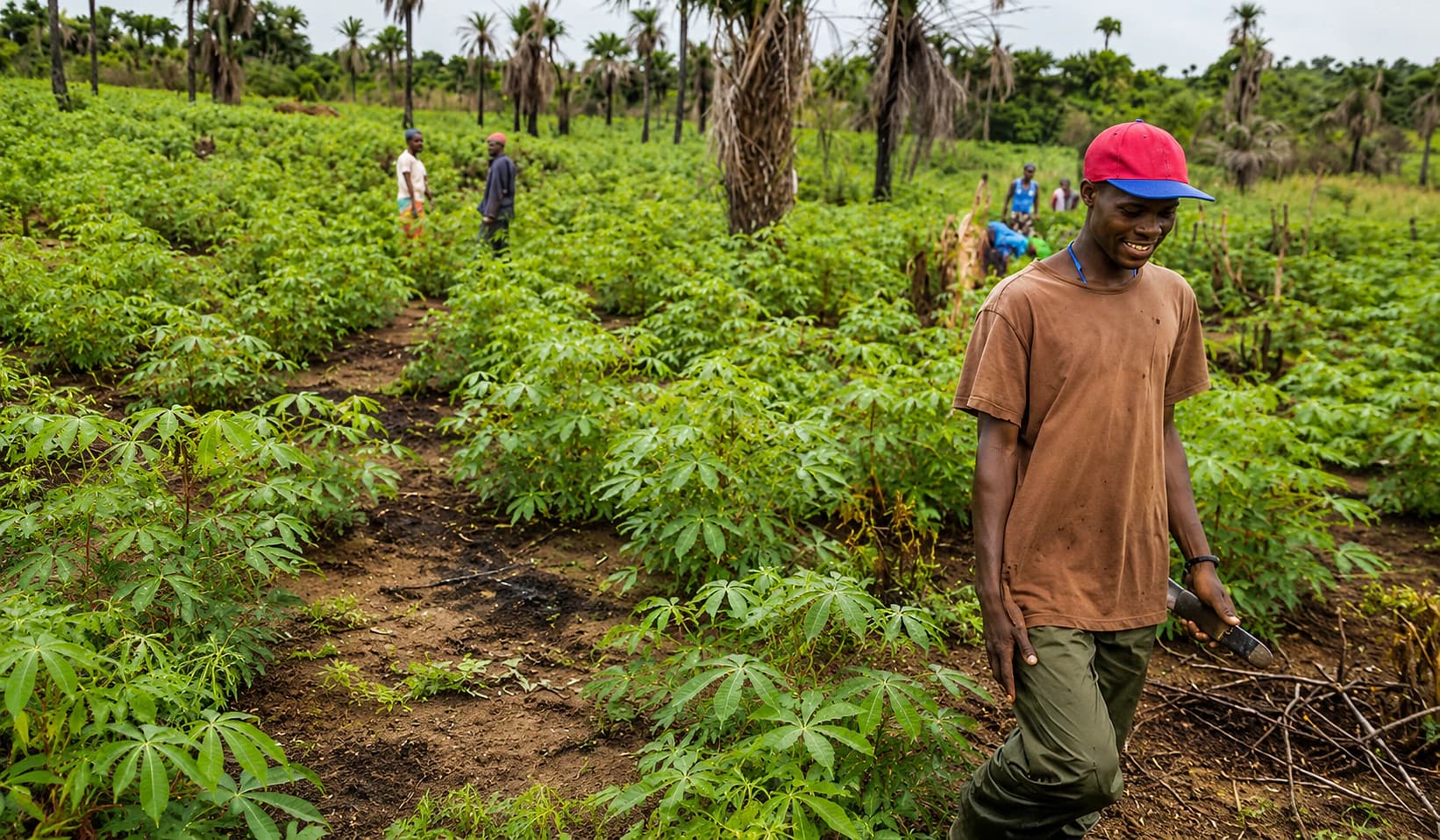
Agriculture accounted for roughly 27 percent of Liberia's US$5.16 billion economy in 2025, second only to services and ahead of mining in size. Its crops — rubber, palm oil, cocoa, rice and cassava — span both export earners and the staples that feed the country. Rice in particular is politically sensitive: Liberia imports a large share of its rice, and the price of the staple has historically been a flashpoint.
The defining tension is between employment and growth. Agriculture occupies the majority of the workforce, yet it grew far more slowly than mining, which employs comparatively few people directly. This is the mechanism by which headline GDP growth can rise while incomes for most Liberians improve only slowly — growth concentrated where the jobs are not.
Early-2026 data add to the concern. Rubber and cocoa production both fell sharply at the start of the year, weighing on the cash crops that generate rural incomes, even as palm-oil output rose. The mixed picture reflects how dependent the sector remains on weather, world prices and the limited infrastructure that links farms to markets.
The constraints are long-standing: smallholders with little access to credit, inputs or extension services; poor feeder roads that raise the cost of getting produce to market; minimal local processing that would add value at home; and ageing tree stock in the plantation crops. Food security has improved overall, but unevenly, with some counties lagging.
Lifting agricultural incomes would do more to spread the gains of growth than almost any other single change, given how many Liberians depend on the sector. The levers are known — investment, better prices for farmers, roads, storage and credit — but progress has been slow, and the sector's slow growth in a strong year for the economy underscores how far there is to go.
What to watch is whether prices and investment lift farm incomes, whether the early-2026 weakness in rubber and cocoa proves temporary or persistent, and whether rice production and food security improve across all counties.