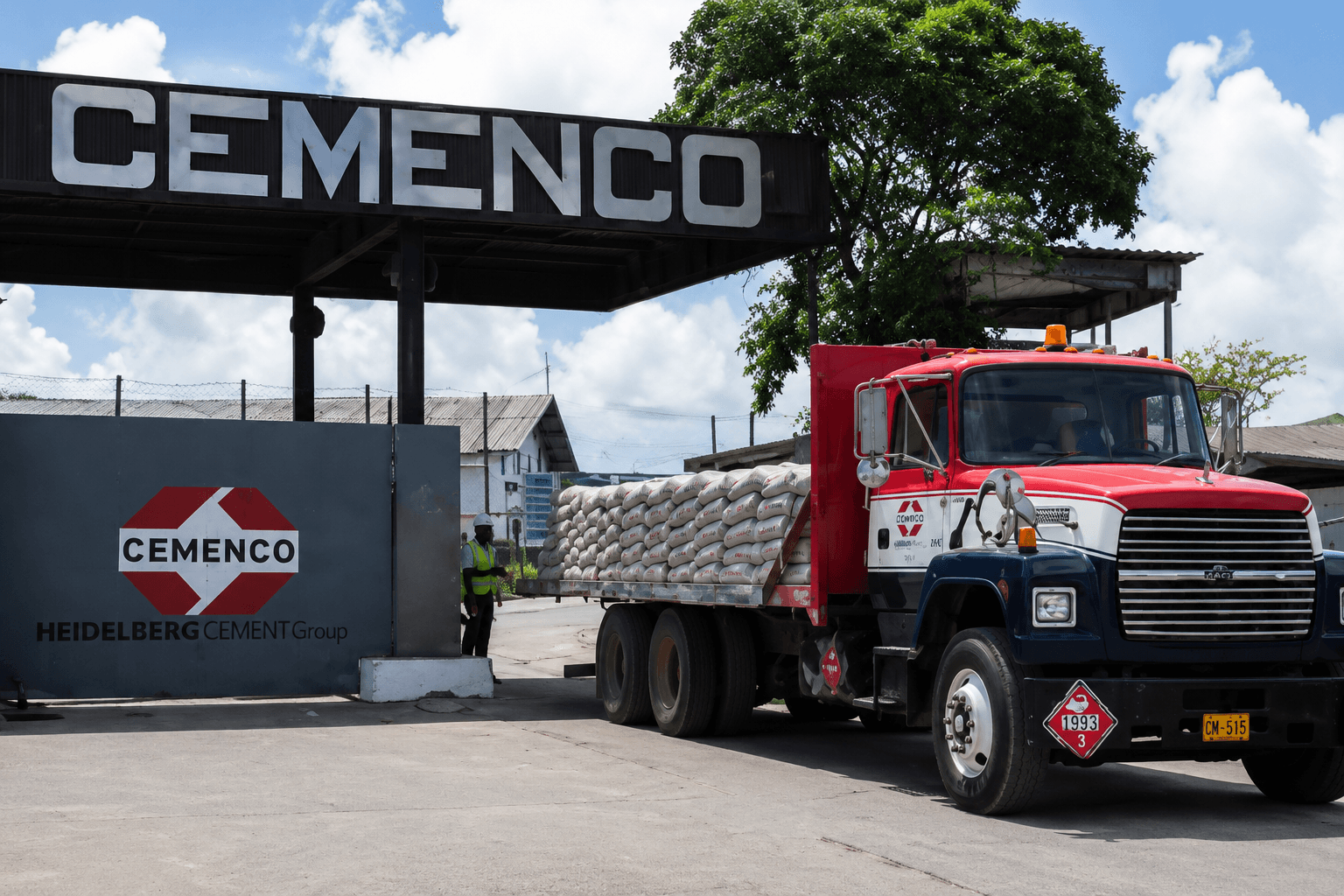
Liberia's cement production reached a record of 89,000 metric tons in March 2026, up 52.5% from 58,500 tons a year earlier and rising for several consecutive months, according to the Liberia Institute of Statistics and Geo-Information Services (LISGIS) via the Central Bank of Liberia.
Cement is one of the most reliable barometers of construction activity, because it is bulky, hard to stockpile and used almost as soon as it is produced. A sustained climb in output — from 71,000 tons in December to record levels by March — points clearly to an upturn in building.
The record run corroborates a construction sector that grew to US$270 million in 2025 and rising steel output, together painting a consistent picture of an investment and building boom in housing, commercial development and infrastructure.
Domestically produced cement is also import substitution at work. Cement made in Liberia displaces imports, easing demand for foreign exchange and shortening supply chains for builders. A growing domestic cement industry strengthens the construction sector against the cost and delay of importing a heavy, low-value-to-weight material.
The growth is notable given the constraints on Liberian manufacturing — costly and unreliable electricity above all, since cement production is energy-intensive. That output is setting records despite those barriers underlines the strength of underlying construction demand.
The trend feeds through the economy: cement production supports jobs at the plant and in construction, and reliable local supply lowers building costs. As long as construction demand holds, cement output is likely to stay strong.
Domestic production matters because cement is heavy, low in value relative to its weight and costly to import, so making it at home shortens supply chains and steadies prices for builders. A local industry running at record output gives the construction sector a more reliable, cheaper input than imports trucked from the port could provide.
What to watch is whether the record output is sustained, whether power costs ease for producers, and whether construction demand holds up through 2026.