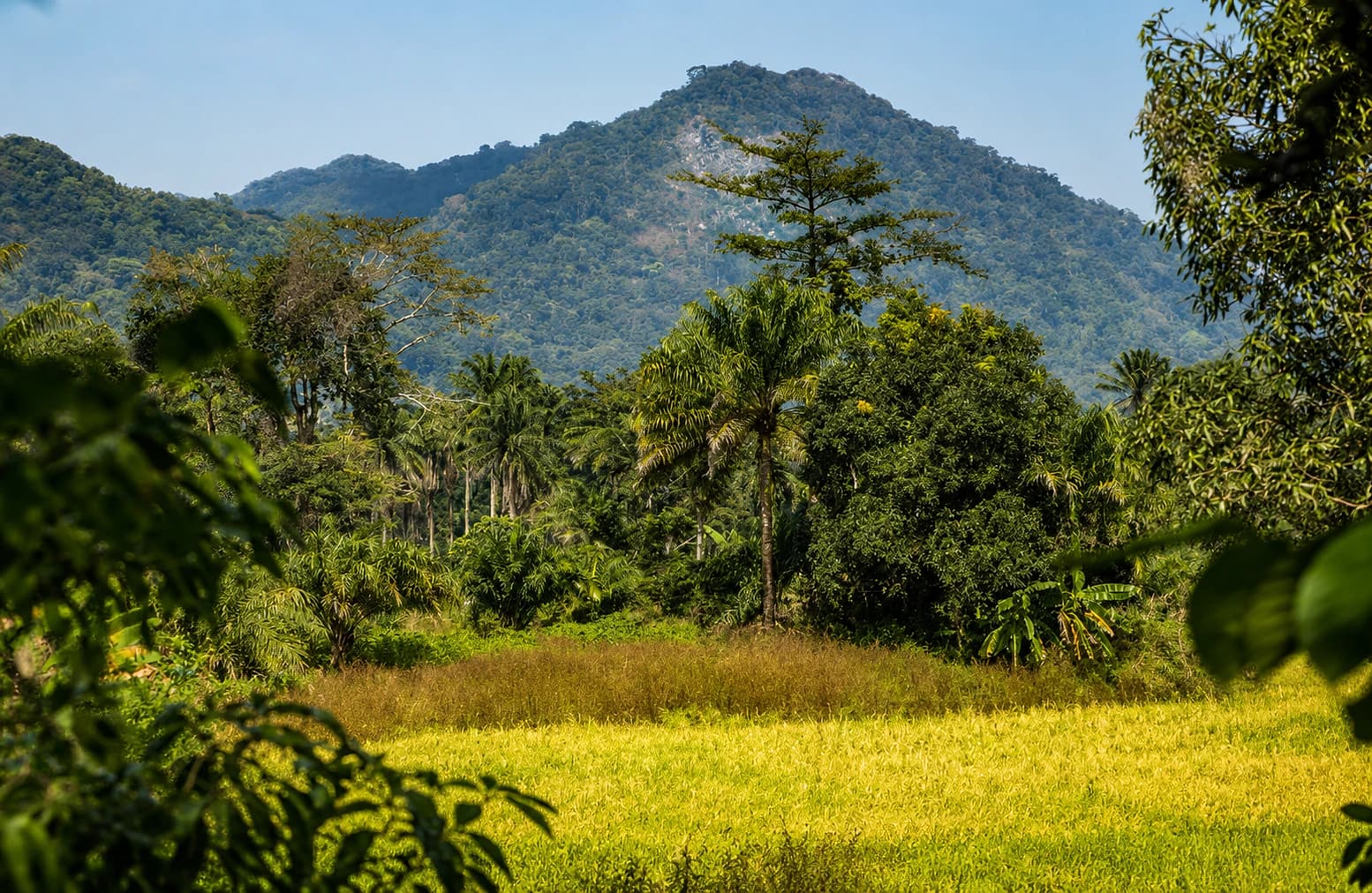
Liberia sits on some of West Africa's most extensive rainforest, yet its forestry sector remains a quiet underperformer. Output from logs and timber was about US$18.0 million in 2025, up a slight 3.9% on the year but still below the US$22.1 million recorded in 2020, according to the Liberia Institute of Statistics and Geo-Information Services (LISGIS) via the Central Bank of Liberia.
Production data underline the stagnation: recorded round-log output stood at zero through the early months of 2026, and sawn-timber volumes have been weak. For a country whose forests cover much of its land area, the sector punches far below its potential weight in the economy.
The reasons are a mix of policy, governance and market forces. Liberia's logging industry has been constrained by concession disputes, reform efforts following years of conflict-era exploitation, and commitments to protect forests under international climate and conservation agreements. Periods of suspended or restricted log exports have repeatedly interrupted the trade.
The tension is a real one. Forests are simultaneously an economic resource that could generate exports, jobs and revenue, and a globally valuable carbon and biodiversity asset that Liberia has pledged to protect, including through arrangements that pay the country to conserve rather than fell its trees.
Done badly, logging brings deforestation, lost revenue and little local benefit, as the conflict era showed. Done well, sustainable forestry and value-added wood processing could provide rural incomes while preserving the resource. The data suggest Liberia has yet to find that balance, with the sector neither growing strongly nor delivering broad benefit.
Charcoal and fuelwood, meanwhile, remain a major energy source for households without reliable electricity, putting a different kind of pressure on the forest that does not show up in the formal timber figures.
Liberia has also sought to be paid to keep its forests standing, through conservation arrangements that value the carbon and biodiversity its rainforest stores. Those deals reframe the forest as an asset to protect rather than fell, but they have been dogged by questions over governance and benefit-sharing, and they sit uneasily beside the ambition to earn from timber.
What to watch is whether sustainable forestry and processing develop, how conservation commitments shape the sector, and whether forest resources are turned into broad-based rural income.