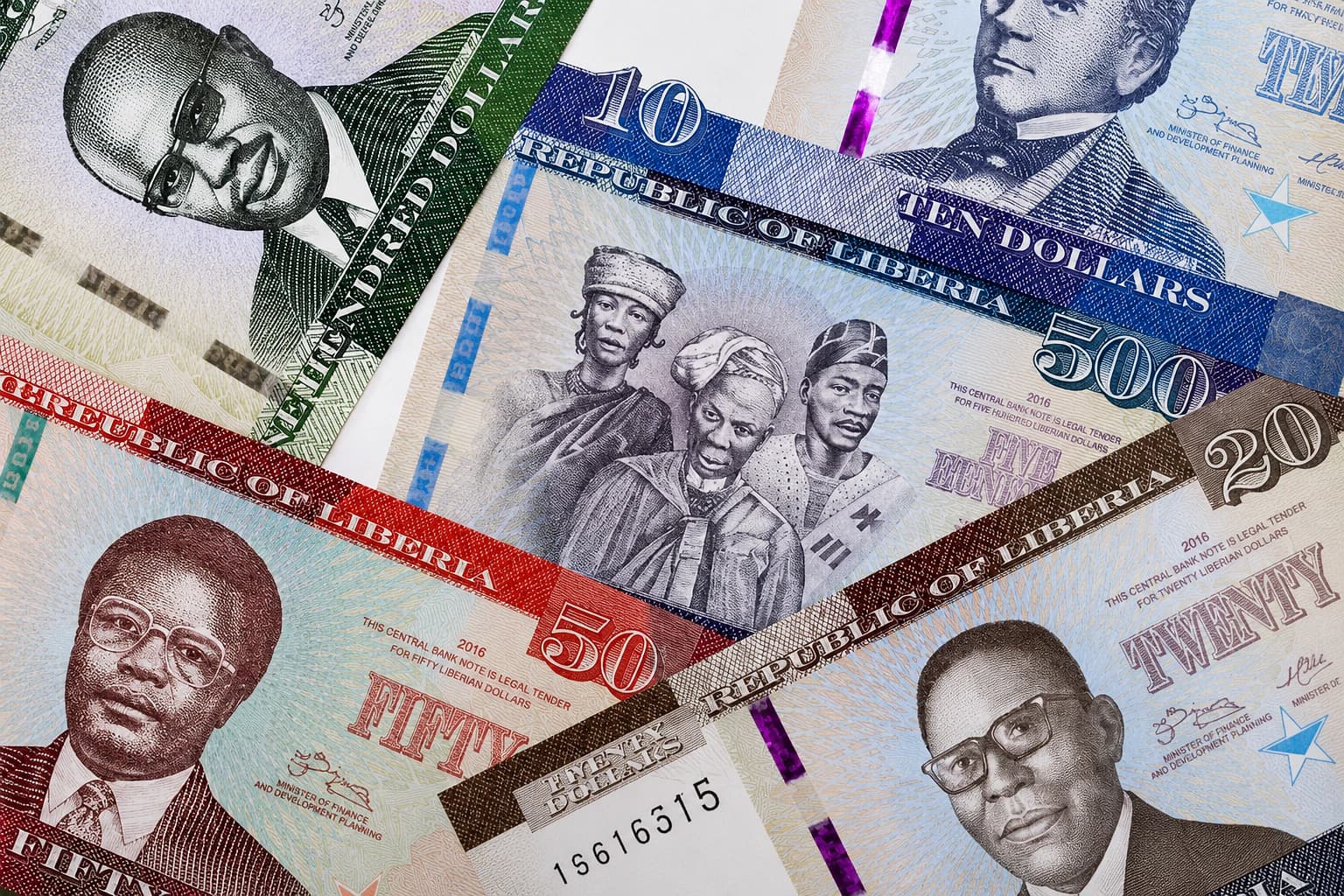
The average interest rate on Liberian-dollar personal loans stood at 16.16 percent per annum in February 2026, according to Central Bank of Liberia data. The US-dollar personal loan rate was identical at 16.16 percent. Both rates have come down over the past year — the LRD personal rate fell from 18.63 percent in February 2025, a decline of 13.3 percent — but they remain well above the commercial lending rate that formal businesses pay.
The commercial lending rate averaged 13.11 percent for Liberian-dollar loans in February 2026, up from 12.25 percent a year earlier. The gap between personal and commercial rates — about three percentage points — represents the premium that banks charge when the borrower cannot present audited financials, registered collateral or a formal business structure. For a cookshop owner, a market trader or a transport operator borrowing L$1,000,000 on personal terms, that premium translates to L$30,500 per year in additional interest charges compared to what a formalized business would pay.
Mortgage rates occupy the middle ground. The average LRD mortgage rate was 14.43 percent in February 2026, down from 16.67 percent a year earlier — a 13.4 percent decline that tracks the easing in personal loan rates. For entrepreneurs who use personal property as collateral for business borrowing, the mortgage rate is often the effective cost of capital.
On the deposit side, banks are paying almost nothing. The average LRD savings rate was 1.94 percent in February 2026, down from 2.14 percent a year earlier. The US-dollar time deposit rate was 3.67 percent. The spread between what banks charge personal borrowers (16.16 percent) and what they pay savers (1.94 percent) is 14.22 percentage points — one of the widest in the Liberian rate structure and a measure of how profitable personal lending is for banks relative to the risk they price in.
The CBL's monetary policy rate, at 16.25 percent since October 2025, sits just above the personal loan rate. The proximity is no coincidence: the policy rate sets a floor under the cost of bank funding, and personal loan rates — which carry the highest credit risk in the portfolio — track it most closely. As the policy rate fell from 20 percent in mid-2024 to its current level, personal loan rates followed, but with a lag and not proportionally.
The structural issue is that most Liberian small businesses cannot access commercial credit at 13.11 percent because they do not meet the documentation and collateral requirements that banks impose. They borrow instead on personal terms — or not at all. Bank credit to the private sector is barely growing, even as broad money expands at over 10 percent. The mismatch suggests that the pool of bankable borrowers, at any rate, is not growing.
For policy, the implication is that cutting the policy rate alone will not close the gap. The three-point premium between commercial and personal rates reflects structural barriers — informality, weak collateral systems, limited credit information — that interest-rate policy cannot address. A cookshop owner paying 16.16 percent in February 2026 would still have paid above 13 percent even if the policy rate fell to zero, because the risk premium is baked into the lending model.
The practical message for informal entrepreneurs is to quantify the cost of informality. Registering a business, keeping basic records and building a relationship with a bank will not guarantee access to 13 percent credit, but it begins to close the gap. At 16.16 percent, every L$100,000 borrowed costs L$16,160 per year in interest — and for most micro-businesses, that is the difference between a loan that pays for itself and one that does not.