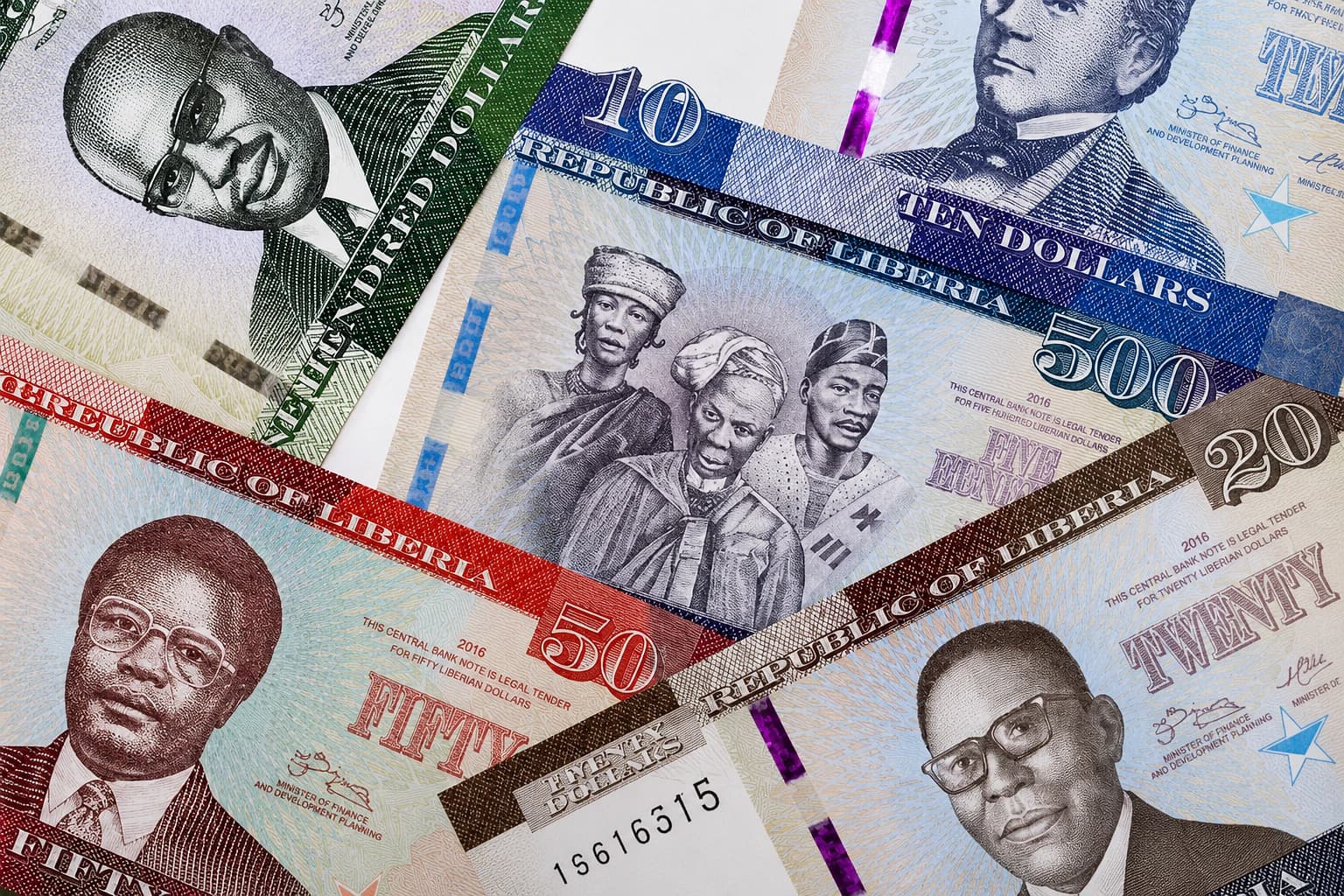
The Central Bank of Liberia held its monetary policy rate at 16.25 percent through May 2026, the eighth consecutive month at that level, according to CBL data. The rate has been on a downward trajectory since mid-2024 — it stood at 20 percent as recently as June 2024 — but the CBL has paused the cutting cycle, holding steady since October 2025.
The policy rate is the benchmark interest rate the CBL uses to signal its stance on inflation. When the rate is high, borrowing is expensive, which dampens spending and price pressure; when it falls, credit becomes cheaper, which supports economic activity. At 16.25 percent, the rate is still restrictive by any standard — well above the 4.50 percent headline inflation rate recorded in March 2026, implying a real (inflation-adjusted) policy rate above 11 percent.
For businesses, the policy rate matters because it sets a floor under commercial lending rates. Commercial lending rates averaged 13.11 percent in February 2026, 3.14 percentage points below the policy rate, while personal loan rates stood at 16.16 percent. The entire rate structure moves with the policy rate, and as long as the CBL holds at 16.25 percent, commercial borrowing costs are unlikely to fall significantly.
The CBL's caution has a rationale. While headline inflation fell to 4.50 percent year-on-year in March 2026 — a marked improvement from the double-digit rates of 2024 — underlying price pressures have not fully dissipated. The core measure, which strips out volatile food prices, remained near 6 percent. Imported fuel prices jumped 12.38 percent in a single month (February to March 2026). And reserve money — the monetary base that the CBL controls most directly — expanded 31.18 percent year-on-year to L$93,242 million, a pace that could feed future inflation if sustained.
Broad money grew over 10 percent in March 2026, reflecting rapid liquidity expansion across the economy. The gap between reserve-money growth (31 percent) and broad-money growth (11 percent) suggests that the central bank's own balance sheet is expanding faster than the commercial banking system's — a dynamic the CBL will want to bring under control before easing further.
The transmission from policy rate to lending rate has been weak. When the CBL cut from 20 percent to 16.25 percent — a cumulative reduction of 3.75 percentage points — the commercial lending rate fell by only 0.9 percentage points (from 14 percent to 13.11 percent). That gap means that further policy-rate cuts may produce even smaller reductions in the rates businesses actually pay, limiting the effectiveness of monetary easing as a tool for stimulating private-sector investment.
For business planning, the practical takeaway is that interest rates are unlikely to fall sharply in 2026. The CBL has reason to be cautious — fast reserve-money growth, sticky core inflation, imported fuel volatility — and even if it resumes cutting later in the year, the pace will likely be gradual. Businesses should plan on borrowing costs in the 12 to 14 percent range for commercial credit and above 15 percent for personal and mortgage loans through the end of the year.
The longer-term question is whether the Liberian rate structure can normalize to levels that make bank credit accessible to a broader range of businesses. At 4.57 percent real GDP growth and 4.50 percent inflation, the economy has the fundamentals to support lower rates — but the structural barriers of informality, weak collateral, and limited credit information will keep the spread between what the CBL signals and what borrowers pay wide for as long as those barriers persist.